Matchday
Matchday guide: a game in Qatar
From the metro ride out to the walk home: entry and security, heat, dress, crowds and the small courtesies that make match day in Qatar go smoothly.
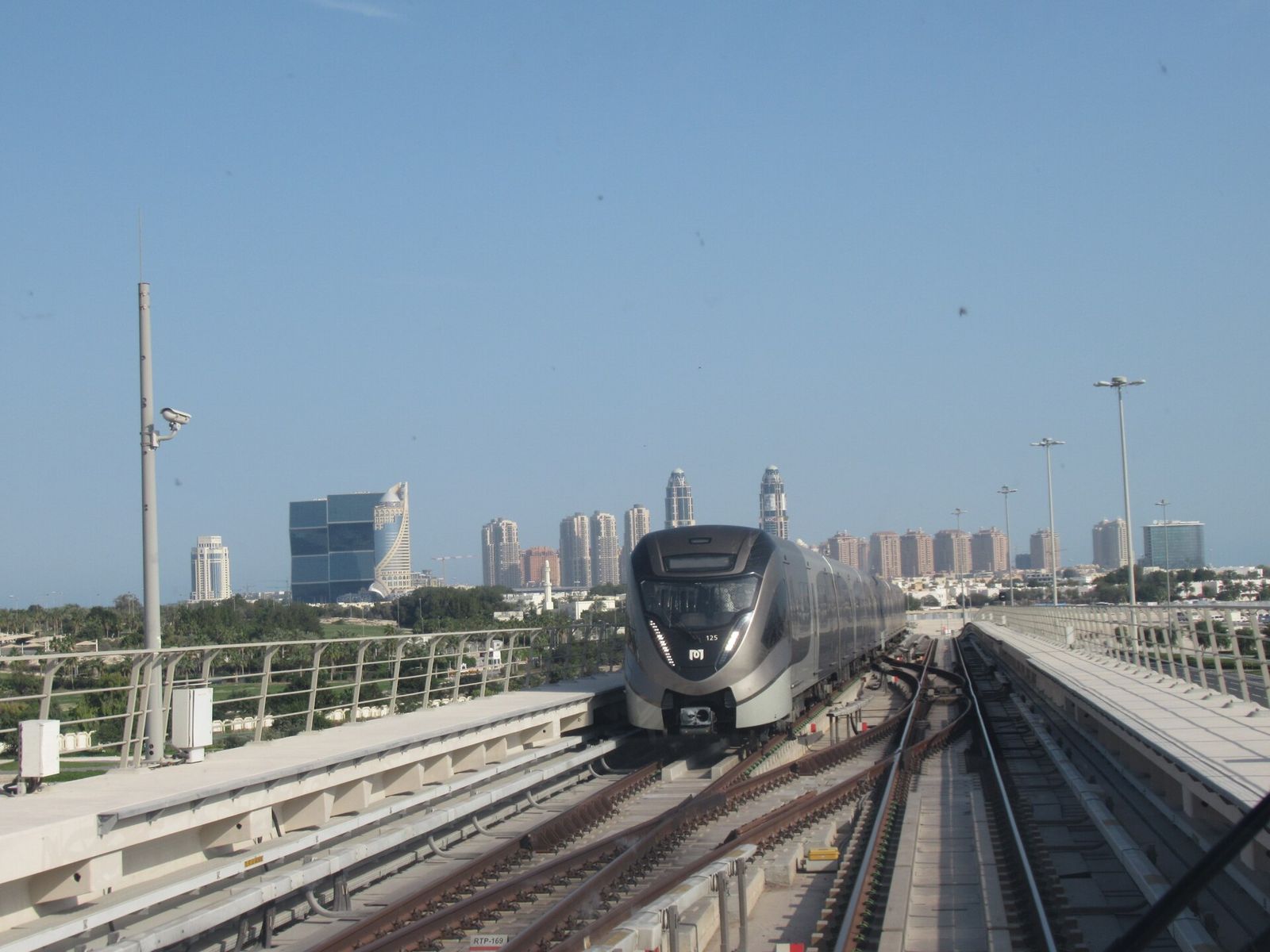
A Red Line train on one of the metro's elevated stretches.
Before the day
Start with the official fixture list, not a screenshot on social media. Leagues, clubs and tournament organisers publish their own, and kick-off times sometimes move once broadcast schedules are settled, so check again the day before.
For major tournaments, tickets have been digital, held in an official app or account on your phone, and organisers have at times asked every spectator to register in advance. Rules differ for each event, so read the official entry information early and use only the organiser's own channels: tickets from unofficial resellers can be cancelled or refused at the gate.
The night before, check which gate your ticket names. Stadium perimeters are large, and walking round to the wrong side can easily take twenty minutes.
Getting there
The metro is the easiest way to reach seven of the eight World Cup stadiums, and on big match days services are usually stepped up.
Stadiums by metro line
- Red
Lusail Stadium Lusail station
- Red
Al Janoub Stadium Al Wakra station, then a walk or shuttle
- Red
Al Thumama Stadium Free Zone station, then a feeder bus
- Green
Education City Stadium and Ahmad bin Ali Stadium Education City and Al Riffa stations
- Gold
Stadium 974 and Khalifa International Stadium Ras Bu Abboud and Sport City stations
- Road
Al Bayt Stadium, Al Khor No metro; on big match days organisers usually run shuttle buses
Services change on big event days. Check the metro operator's current information before you travel.
Some stations sit almost beside the stadium; others leave a feeder bus or a signposted walk. At big events, a walk of 15 to 30 minutes to your gate is common, because security perimeters keep traffic well back. Taxis and ride-hailing apps work, but road closures push drop-off points away from the stadium and demand soars after the final whistle. For Al Bayt, which has no station, organisers have usually run shuttle buses and park-and-ride sites. Our getting around guide covers the network in detail.
Timing
For a sold-out tournament match, aim to reach the stadium area 90 minutes to two hours before kick-off: security lines build quickly in the last hour, and you will want time to find your seat and a drink of water before the anthems. A league match needs far less margin, usually 30 to 45 minutes.
The weekend falls on Friday and Saturday, Friday midday prayers shape that day, and evening kick-offs are the norm. By car, leave more time than the map suggests, because weekday rush hours in Doha are slow.
Security and bags
Expect airport-style screening at the outer perimeter: bags scanned or searched by hand, then a walk-through detector or a pat-down. Women are normally searched by female staff.
Every event publishes its own list of what you may bring. Common restrictions include large bags, glass, cans, flares, laser pointers, drones, selfie sticks, umbrellas, flagpoles, political or offensive banners and professional cameras with detachable lenses. Do not count on a left-luggage point at the gate: if a bag is refused, you may have to take it all the way back. Travel light.
What to wear
There is no special dress code for spectators, and team shirts, scarves and face paint are all part of the scene. Qatar is a conservative country, though, and covering shoulders and knees is a sensible, respectful default for men and women alike, in the stadium and around town. Leave clothing with offensive slogans at home.
Comfortable shoes matter most, given the walking. Add a cap and a light layer: cooled stands can feel chilly, and winter evenings outdoors turn cool when the wind picks up.
Heat and hydration
Take the heat seriously
Average daytime highs in Doha are around 36 °C in October and 39 °C in May. Drink before you feel thirsty, rest in the shade, and ask a steward or medic for help at the first sign of dizziness, headache or nausea.
Several stadiums have cooling systems that push chilled air across the stands and pitch, but they do not cover the walk from the station, the security queues or the open concourses, which can stay hot well after dark from April to October. Drinking water is normally available inside; check whether you may bring your own bottle.
What to carry
- Your phone, fully charged, with the ticket saved and any official app logged in
- A small power bank, if the event allows it
- Photo ID such as your passport, in case it is requested
- A refillable water bottle, if permitted
- Sun cream, sunglasses and a cap
- A light layer for cooled stands and winter evenings
- Ear defenders or plugs for young children
- Your route home, and a meeting point agreed with your group
Inside the stadium
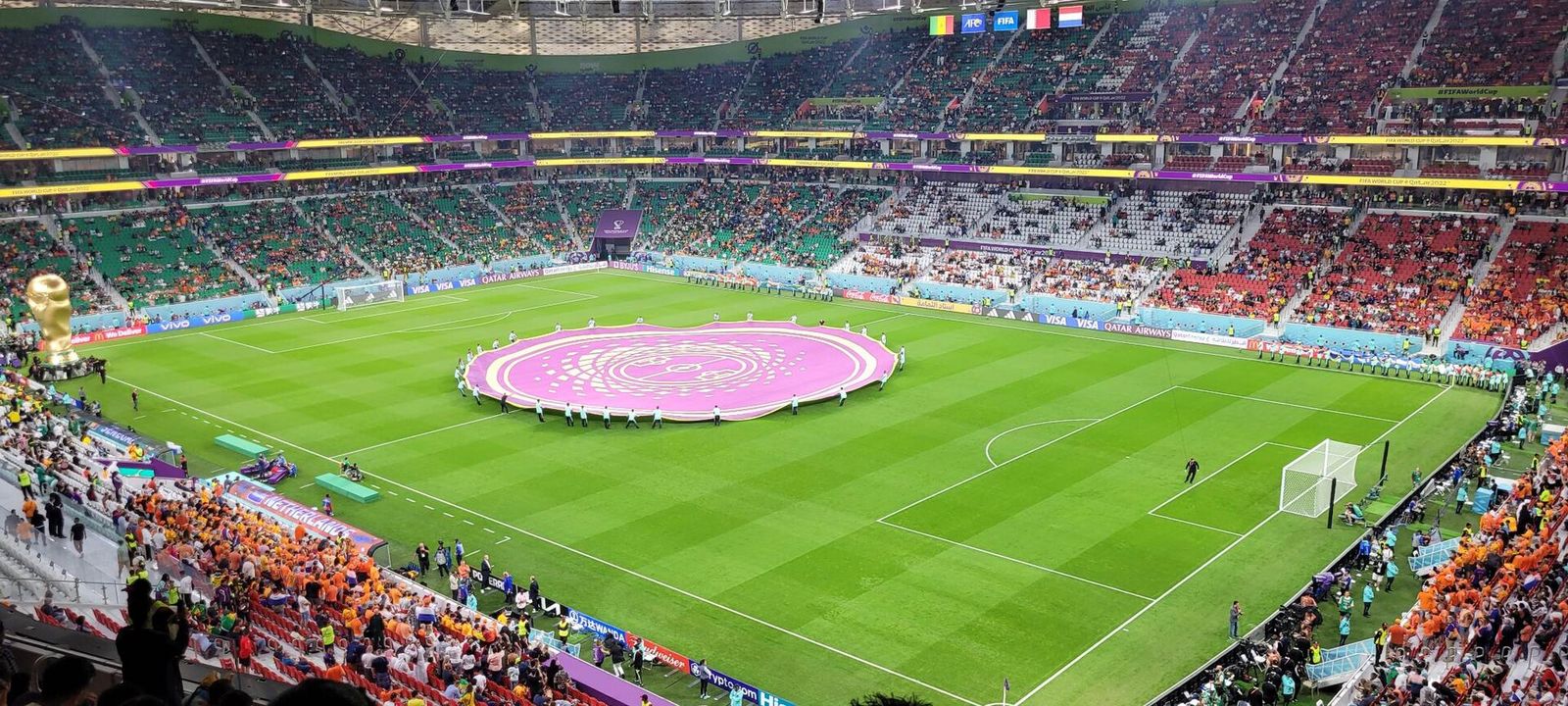
Stewards and signs in Arabic and English guide you to your block, and seats are numbered, so stay in the one on your ticket. The newer stadiums have wide concourses with food kiosks, water points, toilets and first-aid rooms, and prayer rooms are part of the facilities at the major venues.
Family sections are common, so stick to the zone your ticket names. Alcohol is not part of a Qatari matchday: at the 2022 World Cup it was withdrawn from sale at the stadiums just before the tournament began, and public drunkenness is an offence in Qatar.
Accessibility
The stadiums built or rebuilt for 2022 have accessible seating with a clear view of the pitch, step-free routes, lifts, accessible toilets and hearing loops. At that tournament, Al Bayt, Lusail and Education City also offered sensory rooms for fans with autism or other sensory needs, and audio-descriptive commentary in Arabic was available at every match.
Whether these services run at a given event depends on the organiser, so ask well in advance about seating and accessible drop-off points. Metro stations are designed to be step-free, though after a big match it is worth waiting for the crowds to thin.
Etiquette in the stands
Loud, colourful support is welcome. Discriminatory chants, obscene gestures, abuse of players or other fans and political banners are not, and can lead to ejection or legal trouble. Keep public displays of affection low-key, as anywhere in Qatar.
Photos and filming
Photographing the pitch and your own group on a phone is normal. Ask before photographing other spectators, especially women and families, and do not film stewards, police or security checks. Streaming the match itself may be restricted, so check the event's rules.
With children
Plan around crowds and noise and a match can be the highlight of a family trip. Bring ear defenders, write your phone number on a wristband or a card in your child's pocket, and agree an easy meeting point, such as a numbered gate. Pushchairs may not be allowed into the seating bowl. After the final whistle, staying seated for twenty minutes beats the first rush for the station.
Getting home
At big events the queue for the station is managed with barriers and stewards. Lines keep moving, but after a sell-out they can take a long time. Wait until the crowd thins, walk on to another station if there is a marked route, or meet a taxi at a pick-up zone away from the stadium.
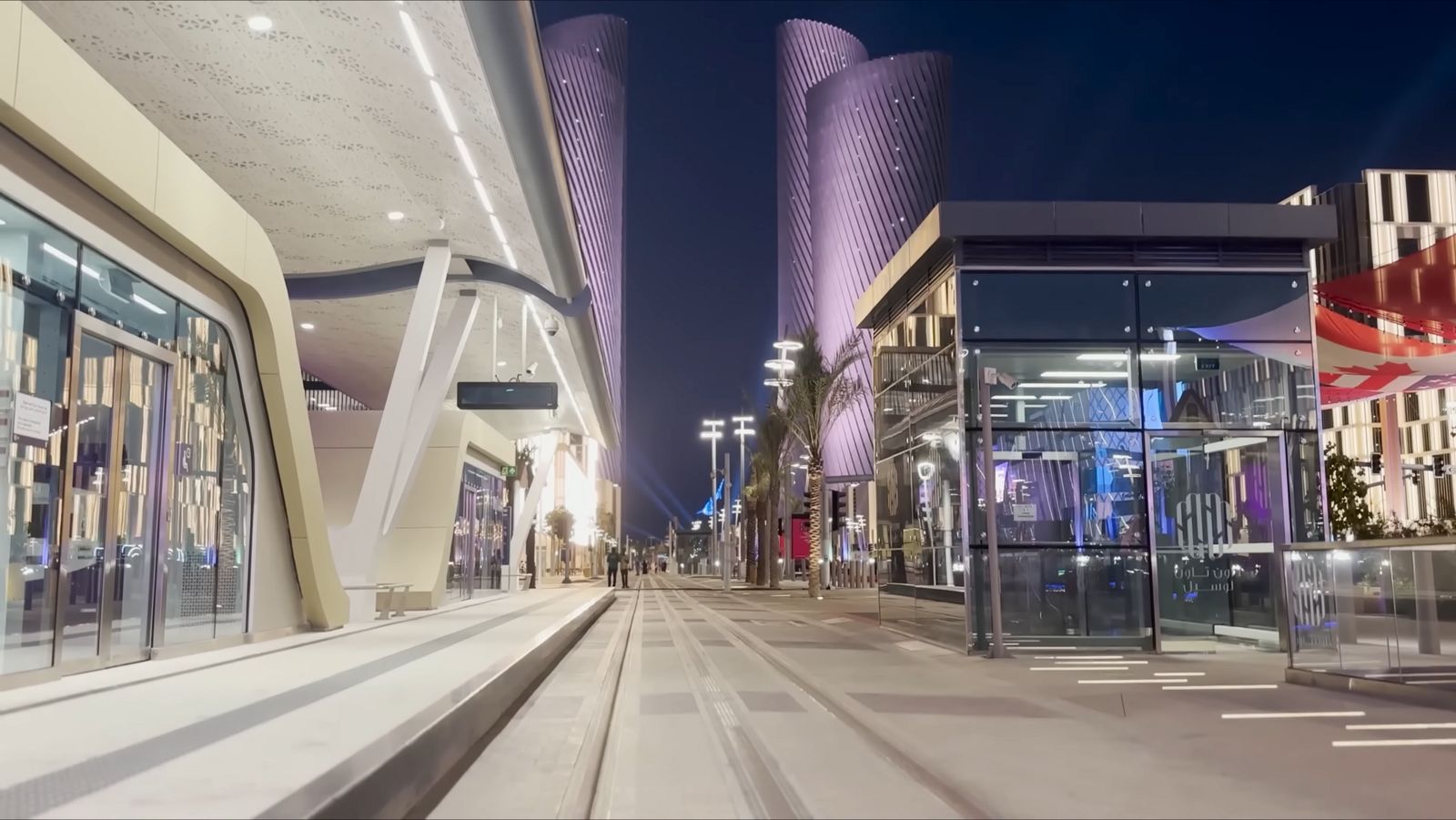
There is no need to rush back anyway. Evenings are the best part of the day in Qatar, and Souq Waqif, the Corniche and, after a game in Lusail, Lusail Boulevard stay lively late. Our sights guide has more ideas, and the stadiums overview compares all eight venues.
Frequently asked questions
Can I bring my own water into the stadium?
It depends on the event. Some allow an empty refillable bottle, others no bottles at all; drinking water is usually available inside. Check the official list of permitted items.
Is there a dress code at football matches in Qatar?
Not a formal one. Team colours are welcome, and covering shoulders and knees is a sensible, respectful default in Qatar.
How early should I arrive?
For a big tournament match, reach the stadium area 90 minutes to two hours before kick-off. For a league game, 30 to 45 minutes is usually enough.
Can I attend a match with reduced mobility?
Yes. The 2022 stadiums have accessible seating, step-free routes and accessible toilets. Contact the organiser in advance about seating and a drop-off point.
Which stadium is hardest to reach?
Al Bayt Stadium in Al Khor, the only World Cup stadium without a metro station. On big match days organisers have usually run shuttle buses; otherwise, plan on a long drive north.