Big-format halls
The largest auditoriums pair a wall-to-wall screen with a powerful multi-channel sound system. Blockbusters land here first, and the best central seats on an opening weekend go early.
Cinemas
Cinema is one of the country's favourite evening habits: cool, late-running and shared by just about every community that lives here. This guide explains where the screens are, how listings work and what to expect once the lights go down.
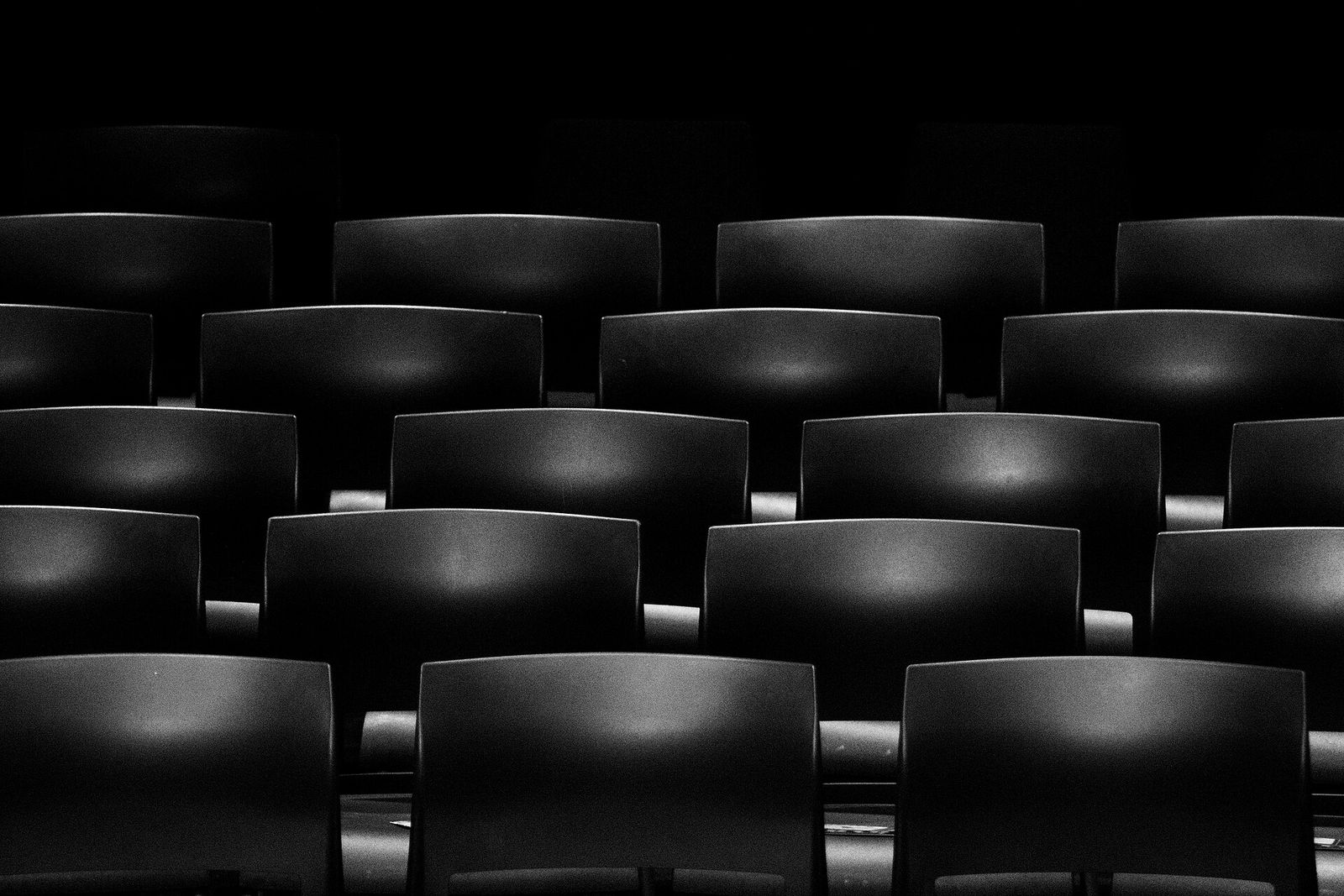
An auditorium before the doors open (illustrative photo, location not specified).
Screen types
Most multiplexes mix standard halls with a few premium formats. Names and features vary from one operator to the next, so read the description beside each showing before you choose.
The largest auditoriums pair a wall-to-wall screen with a powerful multi-channel sound system. Blockbusters land here first, and the best central seats on an opening weekend go early.
Smaller premium rooms swap rows of seats for wide reclining chairs, extra legroom and food brought to your seat. Some cinemas add a private lounge where you wait before the film.
Selected screens use seats that tilt and shake in time with the action, sometimes with wind or water effects, and many halls can show 3D. Great for an action film, less so after a big dinner.
Animated releases run through the day at weekends and in school holidays, and a few multiplexes have children's auditoriums with brighter decor and space to play before the film starts.
Evenings start late in Qatar, above all in the hot months and during Ramadan. Weekend showings that begin close to midnight are common, and the last films can finish in the small hours.
Every listing states the soundtrack language, the subtitle language and the age rating. Check all three, because the same film may run in different versions on different screens.
Almost every commercial cinema in Qatar sits inside a large shopping centre. That is less dull than it sounds: the centres are cool, open late and easy to park at, and a film slots neatly into an evening that also includes dinner. Doha and the neighbouring municipality of Al Rayyan hold most of the screens, and newer multiplexes have followed the city's growth along the main roads out of town. Al Khor, up the coast to the north, got its first multiplex in 2016.
We do not name chains or centres here, because operators change. Look up the film you want, then compare the venues closest to where you are staying. Many centres are not within walking distance of a metro station, so allow time for a feeder bus, a taxi or a ride-hailing car, and plan the journey home before a late show. Our getting around guide covers the options.
Programming follows the people who live here, and Qatar's population is overwhelmingly international. Hollywood releases take a large share of the screens, normally shown in the original English with Arabic subtitles. Arabic cinema has a loyal following, from Egyptian comedies to newer films from the Gulf, and Indian films get a generous slice of the schedule: Hindi titles, plus Malayalam, Tamil and Telugu releases for the large South Asian communities. Filipino and other Asian films appear from time to time, and animated family films often run in both English and dubbed Arabic versions.
New international releases tend to open midweek, often on a Thursday, so the start of the weekend brings fresh titles. Big Indian and Arabic films are often timed for the Eid holidays, when auditoriums fill with families. For something less mainstream, see the cultural programmes further down.
Each showing on a listing carries three details that matter: the audio language, the subtitle language and the age classification. A film may be dubbed on one screen and in its original language on the next, so read the line beside each time rather than the poster in the lobby.
Films are approved by the authorities before release, and the culture ministry sets the classification; categories are updated from time to time, and the rating on the cinema's own listing is the one staff apply at the door. The scale runs from G, suitable for all ages, through parental-guidance bands to 15+ and 18+. Under-age viewers can see some of the middle ratings only with an adult, and the top two exclude anyone younger than the stated age. Staff can ask for proof of age, so carry ID if you look anywhere near the line, and bring it for any teenagers in your group.
Some films are shown in a version edited for local audiences, and occasionally a title released elsewhere does not open in Qatar at all. The local listing is always the best guide to what is actually on.
Cinema manners in Qatar are much the same as anywhere, with a few local accents. Switch your phone to silent and keep the screen dark; filming or photographing the film is illegal as well as rude. Audiences are often families, so expect children at evening shows of family films. Keep displays of affection low-key.
Because cinemas sit inside shopping centres, the usual guidance for public places applies: dress modestly, with shoulders and knees covered, and avoid very tight or see-through clothes. Some centres remind visitors of this at the entrance. Auditoriums are kept cool, sometimes very cool, so a light layer or a scarf is worth carrying even on a hot night. During Ramadan, eating and drinking in public before sunset is not permitted, and cinema schedules shift later into the evening. Our travel tips cover dress and behaviour in public in more detail.
The weekend in Qatar falls on Friday and Saturday, so Thursday and Friday evenings are the busiest times at the cinema. Opening weekends of big releases and the Eid holidays fill auditoriums fast, and a popular premium hall can be fully reserved days ahead.
For a quieter show, go on a weekday afternoon or early evening, or on a Saturday morning. In summer the cinema is one of the most comfortable places to sit out the hottest hours, so matinées fill up in the school holidays. Seats are usually allocated in advance.
Local tip
Before a late show, work out how you will get back. The metro does not run through the night, so plan a taxi or a ride-hailing car for films that end after it closes.
In the cooler months, film moves outdoors. The Katara Amphitheatre, a tiered stone arena facing the sea in Katara Cultural Village, has hosted open-air film nights alongside concerts and dance, and Katara was one of the main venues of the first Doha Film Festival in 2025. During the pandemic years the Doha Film Institute ran drive-in screenings in Lusail, and Msheireb Downtown Doha has staged a winter outdoor cinema for families in one of its public squares.
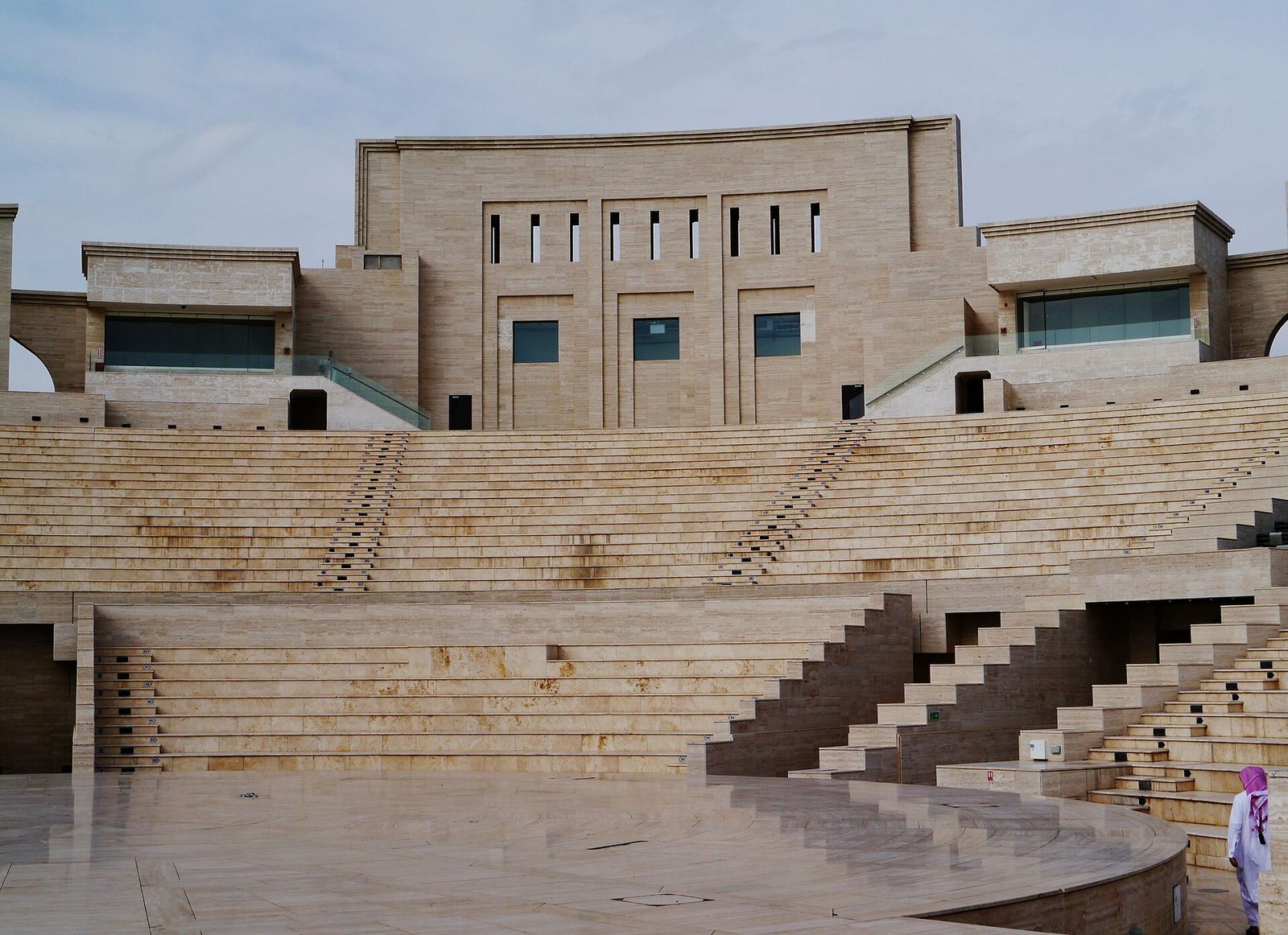
These events are seasonal and change from year to year, and parks and districts sometimes add outdoor screens around the holidays. Treat them as a bonus rather than a certainty, and check the organisers' official channels in the weeks before your trip.
For something more curated, look to Doha's cultural institutions. The Doha Film Institute runs screenings, talks and film clubs through the year, and in 2025 its festival also used the Museum of Islamic Art. Qatar National Library hosts talks and workshops on a wide range of subjects. These programmes are where you will find classic cinema, documentaries, independent Arab films and shorts by filmmakers from Qatar.
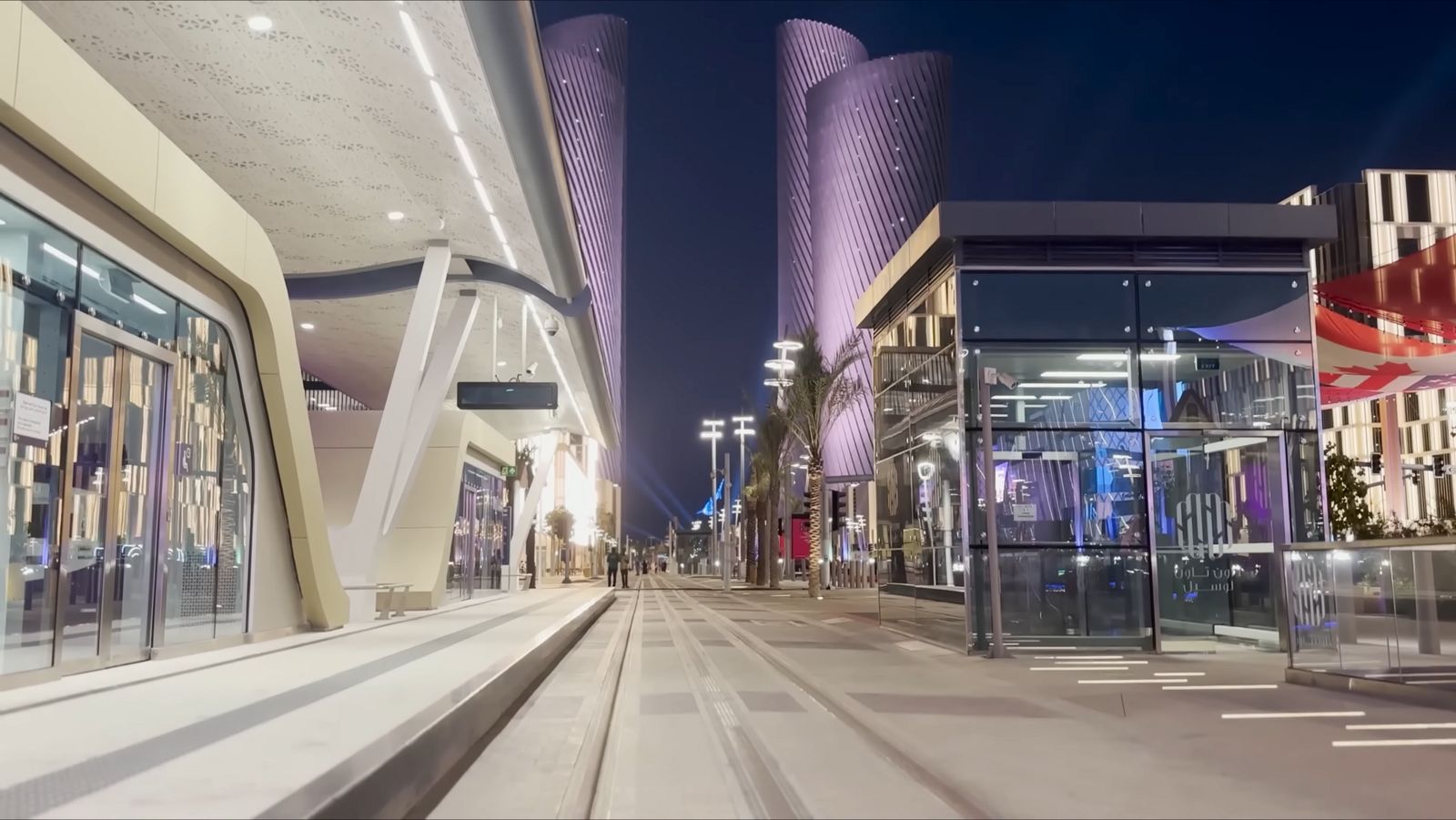
Cinema in Qatar began informally. In the 1960s, residents, among them oil workers in Dukhan, screened films on 16mm projectors in their homes and courtyards, and the shows later moved to sports and cultural clubs. Doha's first purpose-built cinema opened in the early 1970s, with 1972 the year most often given. Home video hit attendance in the 1980s, and audiences came back in the 1990s as new Hollywood and Indian releases reached the screens.
That first downtown cinema closed in 2013 to make way for metro construction, and in 2024 Qatar Museums announced plans to revive the old complex, with a museum of cinema among the ideas. Today's multiplexes grew up with the big shopping centres, while the Doha Film Institute, founded in 2010, has added a festival culture that would have been hard to imagine in the courtyard days.
Usually, yes. International releases normally screen in the original language with Arabic subtitles, and family films often have a dubbed Arabic version as well. Each listing states the audio and subtitle language, so check before you pick a time.
Possibly. For films rated 15+ or 18+, staff can ask for proof of age, and they apply the rating shown on the listing. Carry ID for anyone in your group who might be asked.
Modest everyday clothes, as in any public place in Qatar: keeping shoulders and knees covered is a sensible rule. Bring a light layer, because auditoriums are kept cold.
Weekday afternoons and early evenings, and Saturday mornings. Thursday and Friday evenings, opening weekends and the Eid holidays are the busiest times.