Al Rayyan · Home of Al Rayyan SC
Ahmad bin Ali Stadium
Rebuilt on the site of Al Rayyan's old ground at the western edge of the city, with a facade of patterns drawn from the desert, its wildlife and the country's trading past. It opened on National Day 2020 and is home to one of Qatar's best-supported clubs.
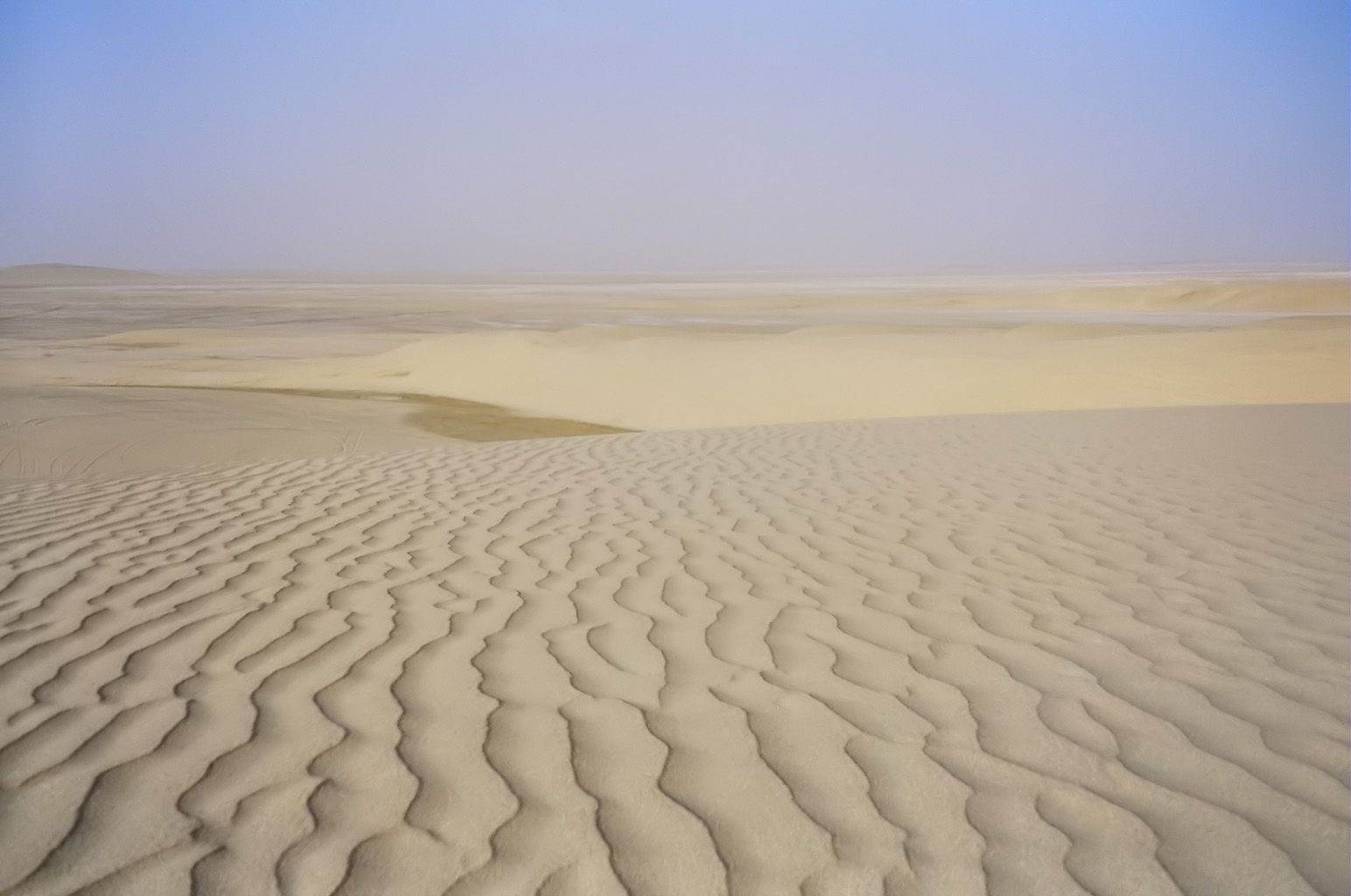
Wind-rippled dunes in the Qatari desert, the landscape the facade patterns echo.
Spec sheet
Figures for the 2022 tournament layout- Area / city
- Al Rayyan, on Dukhan RoadAbout 20 km west of central Doha
- Opened
- 2020Qatar National Day, 18 December 2020
- Tournament capacity
- c. 45,0002022 World Cup layout
- Design concept
- Desert, wildlife and tradePattern Design
- Nearest metro
- Green Al RiffaThen a walk of roughly 10 to 20 minutes
- About the design
- The facade's geometric patterns are said to represent family, the beauty of the desert, native plants and animals, and local and international trade. A large media facade can carry projections and match information.
The stadium in brief
Ahmad bin Ali Stadium carries the name of Sheikh Ahmad bin Ali Al Thani, Emir of Qatar from 1960 to 1972, but most fans still call it the Al Rayyan Stadium. It stands on the site of an earlier ground of the same name, built in 2003 with room for about 21,000 people and demolished in 2015 to make way for a World Cup venue.
The new stadium opened on 18 December 2020, Qatar National Day, with the Amir Cup final, exactly two years before the 2022 World Cup final. Its tournament layout held about 45,000 people, and it is now the home of Al Rayyan SC, whose red-and-black colours are picked out in the seating.
Where it is
The stadium lies beside Dukhan Road, the main highway west out of Doha, about 20 km from the city centre in the municipality of Al Rayyan. This is where the western suburbs begin to give way to open desert, a setting that suits a stadium whose decoration draws so heavily on the landscape.
It is the westernmost of the eight venues and sits at the far end of the Green Line. Education City Stadium is just one stop back along the same line, so the two are easy to combine.
Design and architecture
Pattern Design wrapped the stadium in a facade of geometric shapes that are said to represent four themes: family, the beauty of the desert, the country's native plants and animals, and local and international trade. Up close the shapes read as abstract ornament, and it takes a second look to connect them with the stories they are meant to tell.
Part of the exterior is a large media facade, a membrane that can act as a screen for projections, news, tournament information and match updates. On big nights it turns the outside of the stadium into a giant noticeboard, visible from Dukhan Road. Inside, every seat is shaded, and the stands rise close to the pitch in a compact, football-only bowl.
Cooling and recycling
Like the other World Cup venues, the stadium uses cooling technology that delivers chilled air close to spectators and players, so football can be played here for much more of the year. The system follows the approach first used at Khalifa International Stadium.
Recycling was a theme of the rebuild. Roughly 90 per cent of the rubble from the old stadium was earmarked for reuse, either in the new building or in public art installations around the site, so that the demolished ground lives on in its replacement.
History and big matches
The stadium was one of two venues for the 2020 Club World Cup, played in February 2021, and staged four matches of the 2021 Arab Cup. Its biggest weeks came during the 2022 World Cup, when it hosted seven matches. The first, on 21 November, was the United States against Wales, a 1–1 draw that marked Wales's first World Cup match since 1958. England beat Wales 3–0 here eight days later, and Croatia's goalless draw with Belgium on 1 December sent the Belgians home.
The last and largest crowd came on 3 December 2022, when 45,032 people watched Argentina beat Australia 2–1 in the round of 16, with Lionel Messi among the scorers on the road to Argentina's title. The stadium was busy again during the 2023 Asian Cup, played in early 2024, and on 6 February Jordan beat South Korea 2–0 here to reach their first Asian Cup final.
After 2022
The stadium was planned to shrink after the tournament. Around 20,000 upper-tier seats were to be removed and donated to countries that need sporting infrastructure, leaving a ground of about 21,000 seats that better suits a club's weekly crowds. As with the other venues, published figures for the present capacity vary, so check with the venue before a big match.
The wider precinct was planned as a community sports hub for this side of Al Rayyan, with a running and cycling track, football and cricket pitches, tennis and padel courts, a skate park, outdoor gym equipment and an aquatics centre. Which of these are open at any given time varies, so check before making a special trip.
Getting there
The Green Line ends at Al Riffa, the station for the stadium. From Msheireb in central Doha it is a straight ride west with no changes. The station sits beside a large shopping centre, and the stadium is within walking distance. Our Getting Around guide explains tickets, carriages and connections.
How to get there
-
Take the Green line to Al Riffa
Ride west to the end of the line. The last stops before it are Qatar National Library and Education City.
-
Walk to the stadium
Allow roughly 10 to 20 minutes, depending on your exit and gate. On event days, follow the marked walking routes and the stewards.
-
Or arrive by Road
Dukhan Road gives direct access by car or taxi. On big match days, road closures and set drop-off points can make the last stretch slower than the metro.
Event-day arrangements change. Check the metro operator's and the venue's current information before you travel.
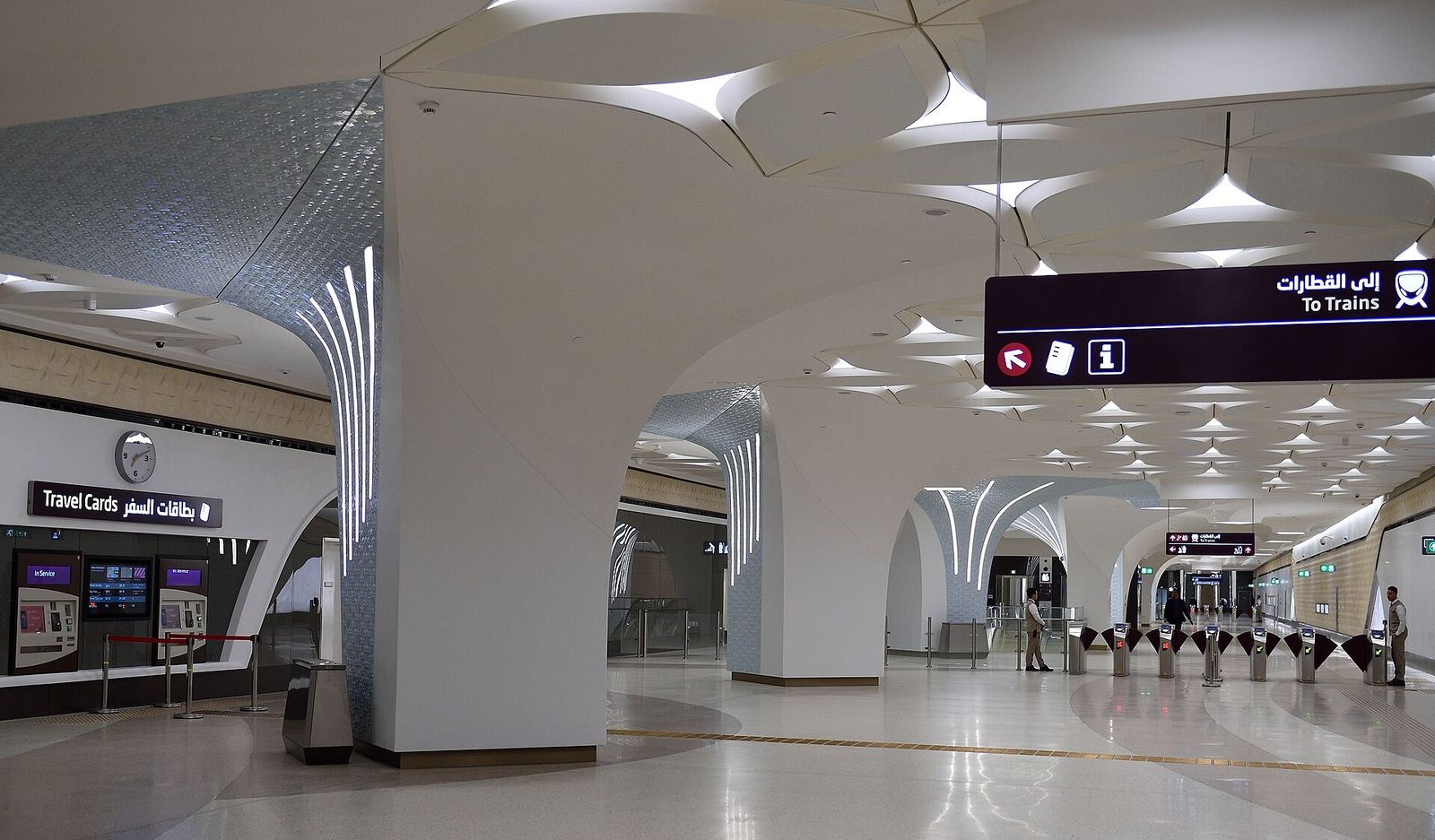
Around the stadium
Education City
One and two stops back along the Green Line, Education City has the Qatar National Library, the Education City Mosque and Oxygen Park, as well as the diamond-clad Education City Stadium. Late afternoon, when the heat starts to ease, is the best time to wander.
West along Dukhan Road
The highway continues west towards Al Shahaniya, an area known for camel racing. Races are held in the cooler months, and schedules vary, so check locally before driving out.
Back into the city
The same Green Line takes you straight back to Msheireb, a short walk from Souq Waqif and Msheireb Downtown Doha. See our Sights guide for what to see in each district.
Visiting tips
Al Riffa is the end of the line, so you cannot miss your stop on the way out, but after the final whistle everyone heads for the same platforms and queues can be long. For big fixtures, arrive 90 minutes to two hours before kick-off and expect to wait a while on the way home. Daytime highs in Doha average around 36 °C in October and only settle in the mid-20s from December to February.
What to carry
- A refillable water bottle, if the venue's rules allow it
- A hat and sunscreen for the walk from the station
- A light layer for the cooled stands and the metro
- A charged phone with your digital ticket and the route home saved
- Something red and black, if you are coming to cheer on Al Rayyan
Check before you go
Opening hours, entry rules and timetables change, so check the official venue or operator information before you visit. Our Matchday Guide covers security, heat and getting home.
Frequently asked questions
Is Ahmad bin Ali Stadium the same as Al Rayyan Stadium?
Yes. It is popularly known as Al Rayyan Stadium, after the club that plays there, and it was built on the site of the previous Ahmad bin Ali Stadium.
Which metro station serves the stadium?
Al Riffa, the western terminus of the Green Line. The stadium is a walk of roughly 10 to 20 minutes from the station.
Who was Ahmad bin Ali?
Sheikh Ahmad bin Ali Al Thani ruled Qatar from 1960 to 1972. Independence from Britain came in 1971, during his reign.
What is shown on the facade?
The facade combines patterns inspired by the desert, local wildlife, family and trade with a large media screen that can display projections, news and match information.