Al Wakrah · Zaha Hadid Architects
Al Janoub Stadium
A sweeping, sail-like roof in the old pearling town of Al Wakrah, south of Doha. Al Janoub was the first stadium built from scratch for the 2022 World Cup and is now the home ground of the local club.
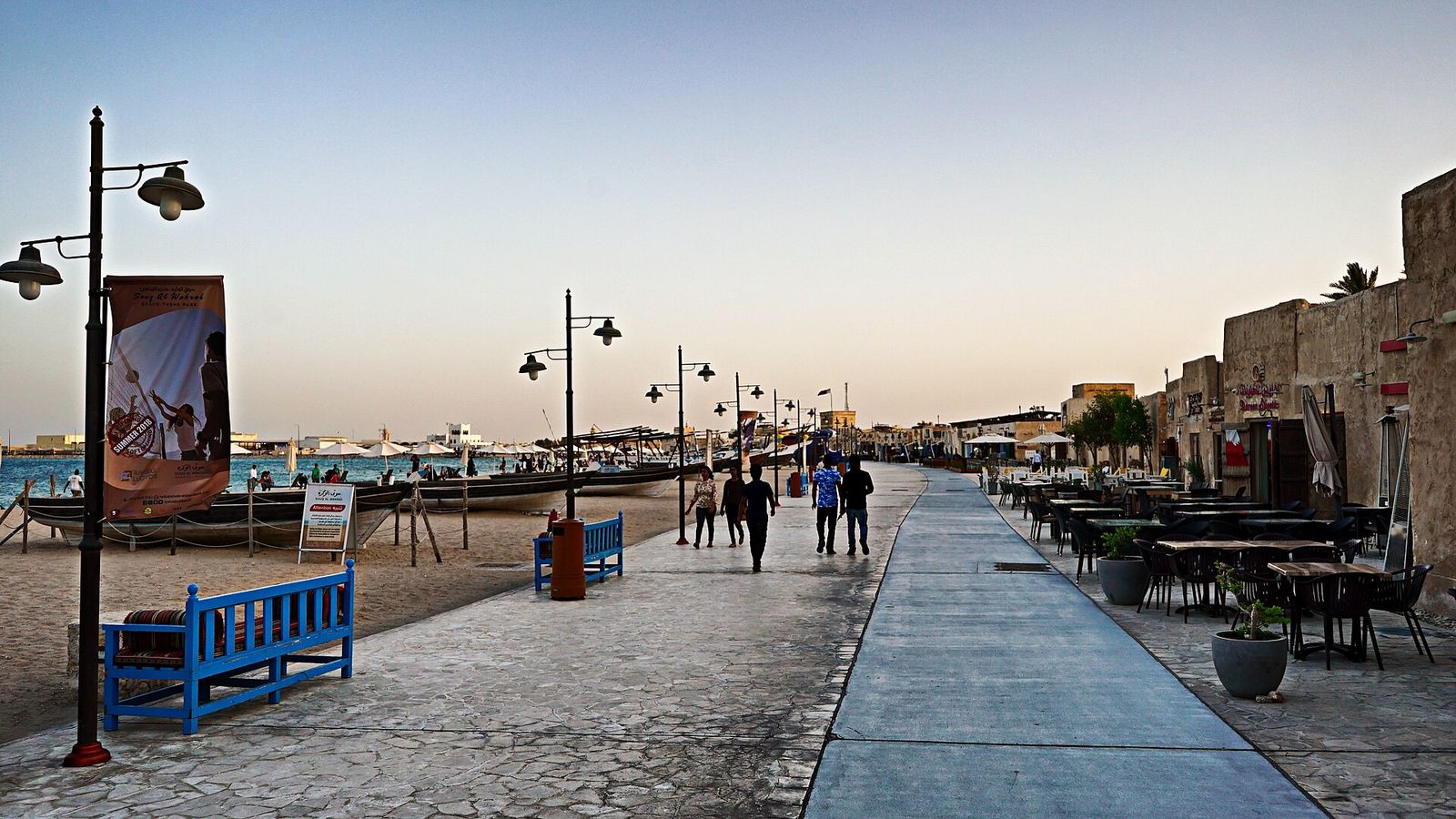
The seafront at Al Wakrah Souq, a short drive from the stadium.
Spec sheet
Figures for the 2022 tournament layout- Area / city
- Al WakrahAbout 22 km south of central Doha
- Opened
- 2019Amir Cup final, 16 May 2019
- Tournament capacity
- c. 44,3002022 World Cup layout
- Design concept
- The sails of pearling dhowsZaha Hadid Architects with AECOM
- Nearest metro
- Red Al WakraThen a shuttle bus or taxi; check event-day plans
- About the design
- A retractable roof of pleated fabric and cables curves over the stands, its form drawn from the sails and hulls of the dhows that once carried Al Wakrah's pearl divers.
The stadium in brief
Al Janoub, whose name means "the south" in Arabic, was the first of the 2022 venues built from the ground up to be finished. Khalifa International Stadium had reopened earlier, but as a redevelopment. Al Janoub opened on 16 May 2019 with the Amir Cup final in front of a near-capacity crowd, and in its early days it was known as Al Wakrah Stadium.
The design came from Zaha Hadid Architects, working with AECOM. Dame Zaha Hadid died in 2016, three years before it opened, so she never saw the finished building. Its tournament layout held about 44,300 people. Today it is the home ground of Al Wakrah SC and stages Qatar Stars League football.
Where it is
The stadium stands in Al Wakrah, about 22 km south of central Doha and beyond Hamad International Airport. Al Wakrah grew up as a fishing and pearl-diving settlement, and its seafront still feels unhurried compared with the capital.
Al Janoub is the southernmost of the eight venues. It lies roughly 55 km in a straight line from Al Bayt in Al Khor, the northernmost, and the road between them is considerably longer. If you are planning more than one match in a few days, check the stadiums overview for how the venues fit together.
Design and architecture
The roof is the whole story. Its curving lines are modelled on the sails of the dhows that Al Wakrah's pearl divers once took out into the Gulf, and the bowed beams that support it echo the timbers of a hull. Seen from outside, the shape suggests a cluster of boats with their sails catching the wind; from the stands, the effect is closer to sitting beneath the canopy of a ship.
Zaha Hadid Architects planned the stadium as the centrepiece of a new urban district rather than a stand-alone arena, with public spaces meant to be used on ordinary days as well as match nights. Its flowing form, with very few straight lines, is typical of the practice's work.
Roof, cooling and climate
The retractable roof, made of pleated fabric and cables, can close over the pitch to shade it. Climate studies helped shape the bowl, and glass was kept to a minimum to limit heat gain, so that the stadium's cooling system has less work to do. Chilled air is delivered close to the seats and the pitch, the method first proven at Khalifa International Stadium and used across the tournament venues.
History and big matches
After the opening Amir Cup final in May 2019, the stadium hosted a semi-final of the Arabian Gulf Cup that December, in which Saudi Arabia beat Qatar 1–0. A year later it staged the final of Asia's continental club competition, and six matches of the 2021 Arab Cup followed.
Seven matches of the 2022 World Cup were played here. France opened their campaign with a 4–1 win over Australia, Cameroon and Serbia drew 3–3, and Australia's 1–0 win over Denmark took them into the knockout rounds. Ghana against Uruguay drew the record crowd of 43,443, and Croatia beat Japan on penalties in the round of 16. Six matches of the 2023 Asian Cup followed in early 2024.
After 2022
Al Janoub was designed with a modular upper tier so that its capacity could be roughly halved after the tournament, from around 40,000 seats to about 20,000, a size better suited to a club ground in a town of Al Wakrah's scale. Published figures for the present capacity differ, so check the current number with the venue before a big game.
Plans for the surrounding precinct included a school, sports facilities and running and cycling tracks. As with all the post-tournament plans, progress varies.
Getting there
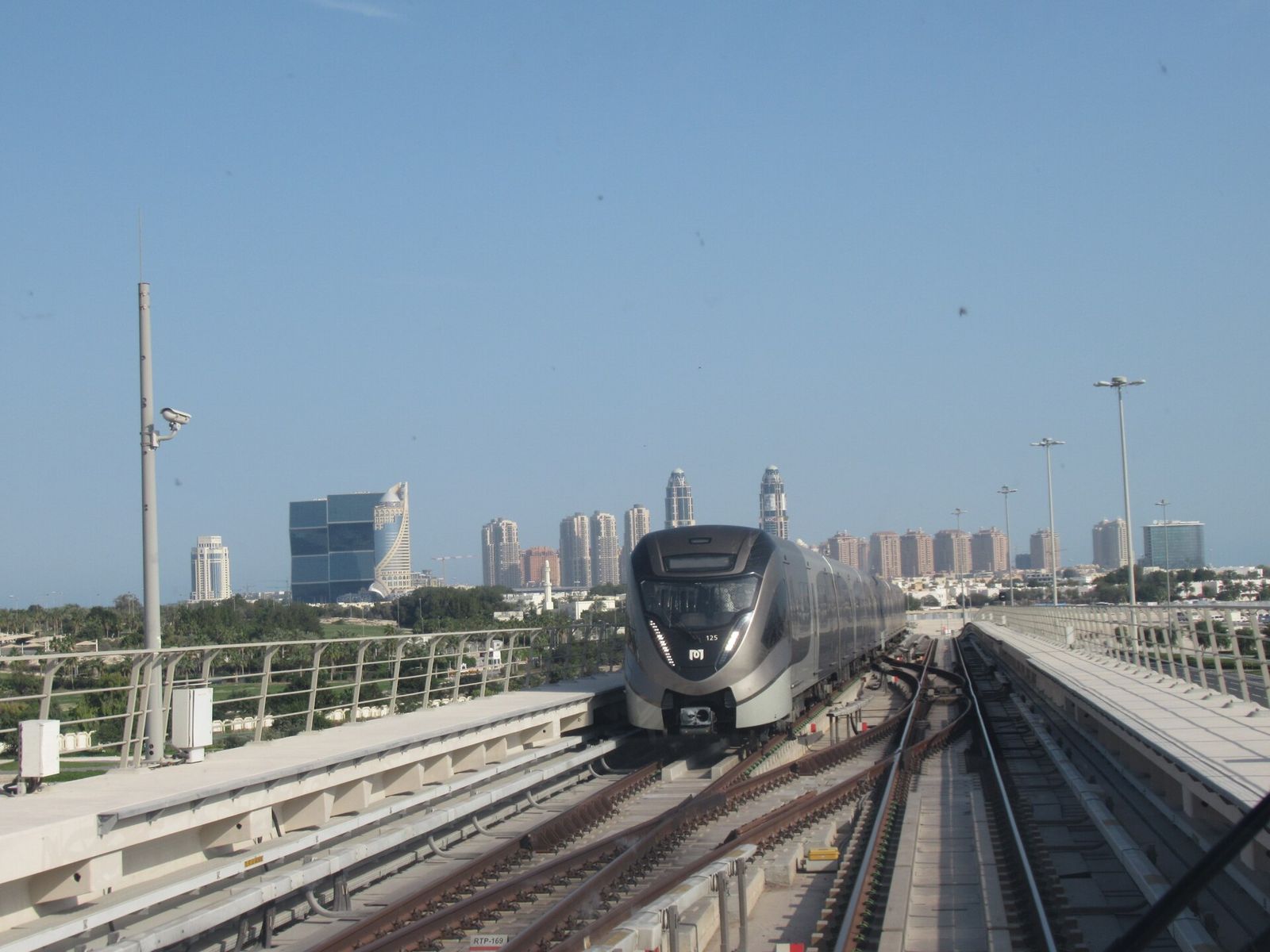
The metro takes you most of the way. Al Wakra is the southern terminus of the Red Line, reached from Msheireb in central Doha via Oqba Ibn Nafie, Free Zone and Ras Bu Fontas. The stadium is a few kilometres from the station, too far for a comfortable walk in the heat, so plan the last stretch in advance. Our Getting Around guide covers the metro, feeder buses and taxis in more detail.
How to get there
-
Take the Red line to Al Wakra
Board a southbound train towards Al Wakra and ride to the end of the line. Trains on the airport branch turn off earlier, so check the destination on the platform.
-
Change to a shuttle bus or taxi
On big match days, organisers have run shuttle buses from the station to the stadium. On other days, a taxi or ride-hailing car covers the distance in a few minutes.
-
Or drive all the way by Road
There is parking near the stadium, though for major fixtures park-and-ride arrangements and road closures may apply.
Event-day arrangements change. Check the metro operator's and the venue's current information before you travel.
Around the stadium
Al Wakrah Souq and the seafront
The traditional-style souq on the waterfront is a maze of low, sand-coloured buildings and quiet lanes, and the beach in front of it is lined with wooden boats. It is at its best around sunset and in the evening, when families come out to walk the promenade. Opening hours of individual shops and stalls vary, so check before making a special trip.
South towards the dunes
Beyond Al Wakrah the road continues south towards Mesaieed and the dunes beyond it, the usual starting point for four-wheel-drive trips to Khor Al Adaid, the inland sea. Our Travel Tips and Sights pages cover day trips from Doha.
On the way back north
Al Thumama Stadium lies between Al Wakrah and central Doha, close to the airport, and is the natural neighbour if you are seeing more than one venue.
Visiting tips
Because of the extra leg from the metro, give yourself more time than for the city-centre stadiums. For big fixtures, aim to reach Al Wakra station at least two hours before kick-off. After the final whistle, shuttle queues build fast; waiting a while in the stadium precinct, or heading towards the souq before calling a car, can be less stressful than joining the first rush.
Daytime highs in Doha average around 36 °C in October and around 30 °C in November, falling to the mid-20s in mid-winter. Evening matches are kinder, but the air is often humid near the coast.
What to carry
- A refillable water bottle, if the venue's rules allow it
- A hat and sunscreen for queues at the station and shuttle stops
- A light layer for the cooled stands and the metro
- A charged phone with your digital ticket, plus a saved route home
- A small bag only, as bag rules at entry can be strict
Check before you go
Opening hours, entry rules and timetables change, so check the official venue or operator information before you visit. The Matchday Guide covers security, heat and getting home.
Frequently asked questions
Is there a metro station at Al Janoub Stadium?
Not at the stadium itself. The nearest station is Al Wakra, the southern end of the Red Line. On big match days shuttle buses have linked the two; otherwise take a taxi or ride-hailing car for the last few kilometres.
Who designed the stadium?
Zaha Hadid Architects, working with AECOM. Dame Zaha Hadid died in 2016, three years before the stadium opened, and her practice completed the project.
Does the roof open and close?
Yes. The stadium has a retractable roof of pleated fabric and cables, which can close to shade the pitch.
Which club plays at Al Janoub?
Al Wakrah SC, the local club, uses it as its home ground for Qatar Stars League matches. Check the league's official fixture lists for dates.