Qatar's film scene is young, well supported and more open to visitors than you might expect. Here is how the Doha Film Institute and its festivals work, where films are shown and how to find a seat at a screening.
2010Doha Film Institute founded
2015first Qumra industry week
2025first Doha Film Festival
Editorial team
Updated 9 October 2026
8 min read
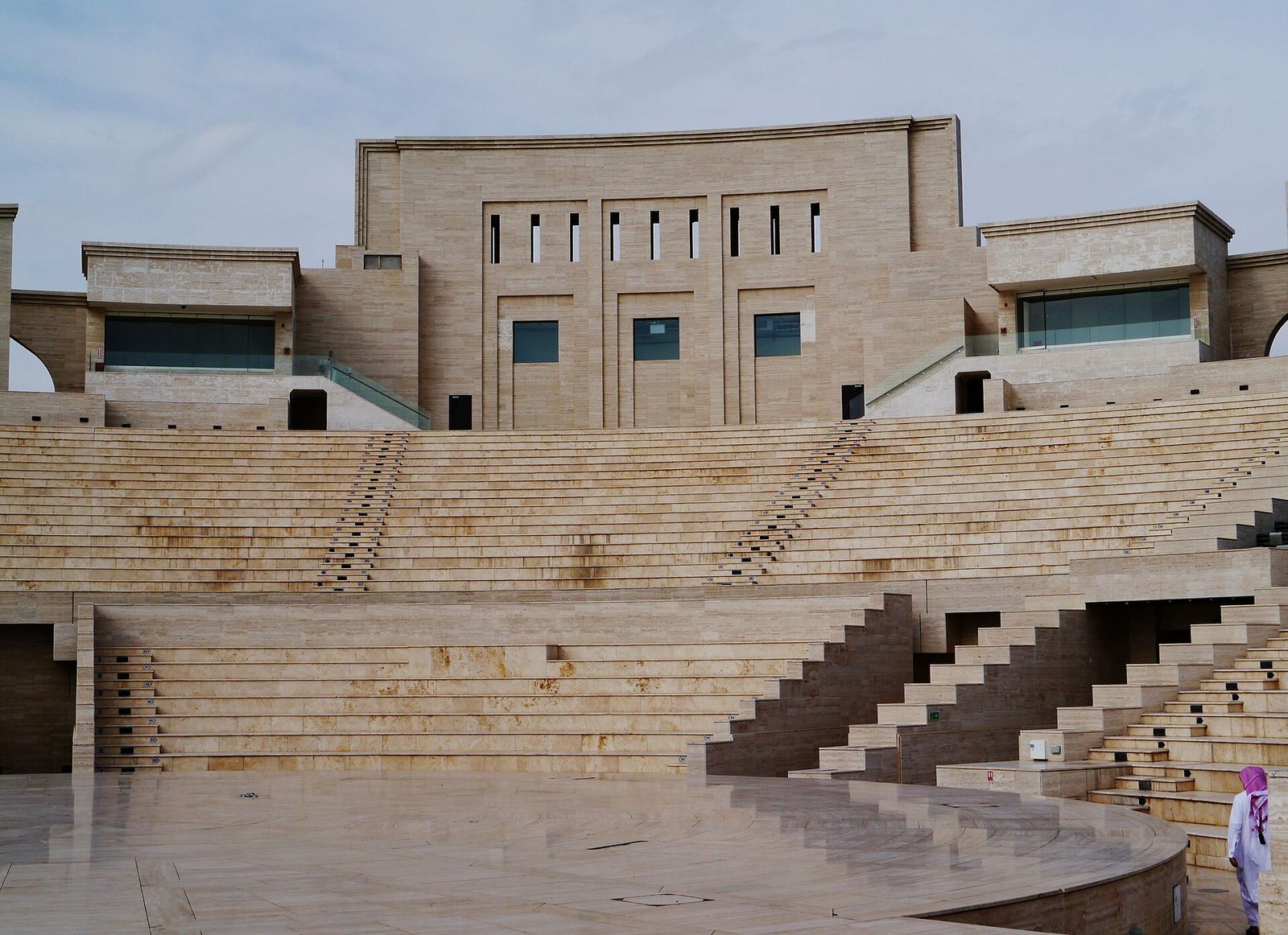
The Katara Amphitheatre, a seaside stage in Katara Cultural Village.
The Doha Film Institute
Almost every thread of Qatar's film culture leads back to the Doha Film Institute, a non-profit organisation founded in 2010 by Sheikha Al Mayassa bint Hamad bin Khalifa Al Thani. It does three main jobs. It funds films through grants and co-financing, with a particular eye on first- and second-time directors from the Arab world and beyond. It trains people, through workshops, labs and mentoring for Qatari and Qatar-based filmmakers. And it puts films in front of audiences, through festivals, film clubs and screenings during the year.
Its reach is wider than its age suggests. Films it helped to finance have competed at Cannes and Venice, and two titles it backed, Theeb and Capernaum, went on to Academy Award nominations. Each grant cycle supports dozens of projects from many countries, and filmmakers from Qatar have strands of their own.
Before the institute ran its own festivals, Doha hosted the Doha Tribeca Film Festival, organised with a New York partner from 2009 to 2012. Katara Cultural Village had its soft opening during the 2010 edition, which shows how closely the city's cultural venues and its film culture grew up together.
Doha Film Festival
The Doha Film Festival is the newest and largest event on the calendar. Its first edition ran from 20 to 28 November 2025, with 97 films from 62 countries shown across Katara Cultural Village, Msheireb Downtown Doha and the Museum of Islamic Art. The programme is built around four competitions: international features, international shorts, Ajyal, and Made in Qatar, which showcases work by Qatari and Qatar-based filmmakers.
The second edition has been announced for 19 to 27 November 2026. As with any young festival, venues, formats and public access can change from one year to the next, so treat these details as a starting point and check the organisers' announcements before you plan a trip around it.
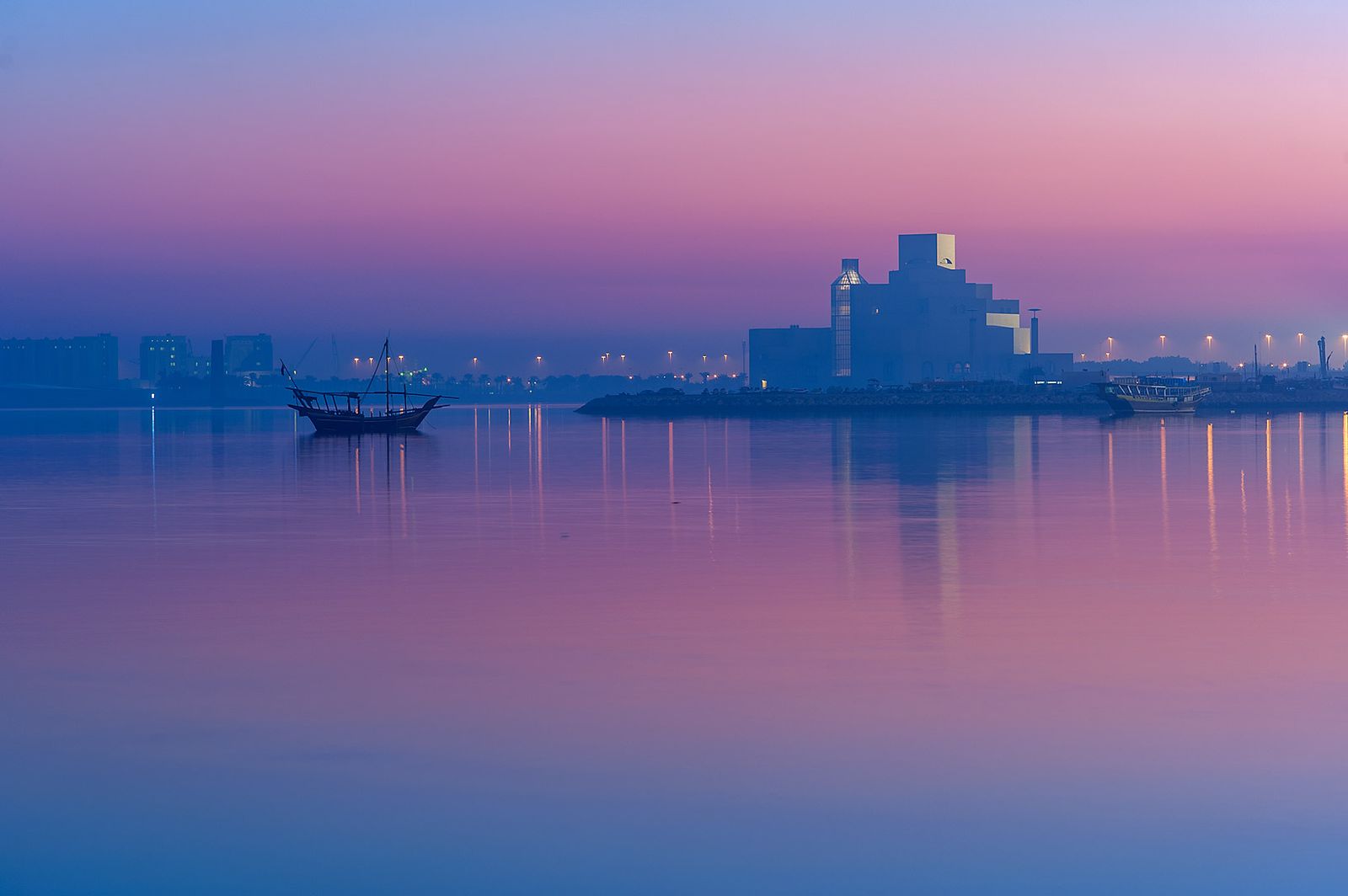
The Museum of Islamic Art, one of the three main venues of the 2025 Doha Film Festival.
Ajyal: films judged by young people
Ajyal, Arabic for "generations", began in November 2013 as a festival with an unusual twist: its juries were made up of children and young people. Jurors aged roughly 8 to 25 watched and debated the films in three age groups, and for more than a decade the festival was a fixture of late autumn, usually running for about a week in October or November. Family screenings and outdoor events, including drive-in nights in Lusail in the early 2020s, built a loyal local audience.
Since 2025 the youth jury has continued as the Ajyal competition within the Doha Film Festival. The standalone festival has given way to the larger event, but its idea, that young audiences deserve a real say, carries on.
Qumra
Qumra is the industry side of the institute's year. First held in March 2015, it brings filmmakers with projects in development or post-production together with established directors, producers and programmers for mentoring, meetings and masterclasses. Most of it happens behind closed doors, but past editions have included public screenings of films by the visiting masters. It usually takes place in spring.
The name comes from an Arabic word for a darkened room, a nod to the 11th-century scholar Ibn al-Haytham, whose experiments with the camera obscura are often counted among the distant ancestors of cinema.
Qatari and Arab filmmakers
Qatar's own filmmaking community is small but energetic, and much of it has grown up around the institute's workshops, labs and grants. Short films dominate, often drawing on family, heritage and a country that has changed at remarkable speed, and the Made in Qatar strand is the best place to see them. Feature films by Qatari directors are still relatively rare, which makes each one an occasion.
Arab cinema more widely is a strength of every programme in Doha, with films from across the region, from the Maghreb to the Gulf, screened alongside world cinema. Directors often attend in person, and the question-and-answer sessions after screenings are among the best parts of a festival visit.
How to join a screening
Most public screenings are easy for a visitor to attend, but they are announced at fairly short notice and seat numbers are limited. A little preparation helps.
Follow the Doha Film Institute's official website and social channels from a few weeks before your trip
Reserve seats early for opening nights, galas and Arabic-language premieres
Check each film's age classification: festival films are rated too, and the limits apply at the door
Carry ID for teenagers in your group, and for yourself at 15+ and 18+ films
Arrive in good time, as security checks and seating take a while at busy venues
Bring a light layer for indoor halls and a jacket for winter evenings outdoors
Check before you go
Programmes, entry rules and venues change, so check the official organiser or venue information before you set out.
Venues
Where films are shown
Festival and cultural screenings move between a handful of venues, most of them public cultural landmarks rather than commercial cinemas. For the multiplexes, see our cinema guide.
Open air
Katara Amphitheatre
A marble-clad amphitheatre facing the sea, with room for up to about 5,000 people. Concerts are its main business, but it has hosted open-air film nights, and on a mild winter evening it makes a memorable place to watch a film.
Indoor stages
Katara Opera House and Drama Theatre
Katara's two indoor halls host concerts, theatre and film events. The opera house, home of the Qatar Philharmonic Orchestra, seats around 550.
Museum
Museum of Islamic Art
I. M. Pei's museum on the bay has a lecture hall and hosted screenings during the first Doha Film Festival. Talks and events change with the exhibitions. More in our sights guide.
City centre
Msheireb Downtown Doha
The regenerated downtown, with its shaded squares and heritage houses, was a festival hub in 2025 and has staged winter outdoor screenings for families.
Theatre
Qatar National Theatre
A Corniche landmark since the early 1980s, the national theatre closed for renovation in 2023 and is being restored. Check whether it has reopened before you plan around it.
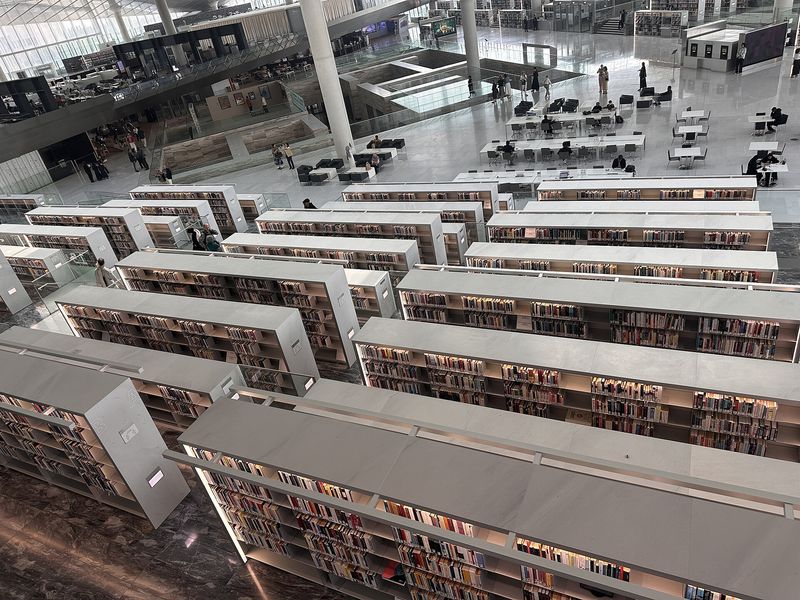
Qatar National Library in Education City runs talks, workshops and exhibitions through the year.
Timeline
Qatar's film scene, year by year
1960s
Courtyard screenings
Residents, including oil workers in Dukhan, show films on 16mm projectors at home and in courtyards; the screenings later move to sports and cultural clubs.
1972
A first purpose-built cinema
Doha's first purpose-built cinema opens in the early 1970s; 1972 is the year most often given.
2009
Doha Tribeca Film Festival
An international festival run with a New York partner, held each year until 2012.
2010
Doha Film Institute founded
The institute is set up to fund, train and screen; Katara Cultural Village opens the same year.
2013
First Ajyal festival
A November festival judged by juries of children and young people.
2015
First Qumra
A spring gathering that pairs emerging filmmakers with established mentors.
2024
Old cinema, new plans
Qatar Museums announces plans to revive the complex of Doha's first cinema, closed since 2013.
2025
First Doha Film Festival
Nine days in November across Katara, Msheireb and the Museum of Islamic Art, with Ajyal as one of four competitions.
2026
Second Doha Film Festival
Announced for 19 to 27 November; check the organisers' programme nearer the time.
Frequently asked questions
Can visitors attend the Doha Film Festival?
Yes. Public screenings have been open to everyone, with seats reserved in advance, alongside invitation-only galas and industry sessions. Check the official programme to see what is open to the public in a given year.
Are festival films subtitled in English?
Most screenings of Arabic and other non-English films carry English subtitles, and many carry Arabic subtitles too. The programme lists the languages for each film.
Do festival films have age ratings?
Yes. Screenings carry classifications like any cinema release, and age limits are applied at the door, so bring ID for younger members of your group.
When is the best time to come for film?
Late November, when the Doha Film Festival has taken place so far, is the busiest period. Qumra usually falls in spring, and cultural venues programme screenings and talks through the cooler months. Our travel tips cover the seasons.
Is there anything for children?
Plenty. Family screenings have been central to the institute's programmes since the first Ajyal festival, and the Ajyal competition continues within the Doha Film Festival.
No tracking here, just your choice
QitketsQat uses no analytics, advertising or tracking cookies. We only keep your consent choice in your browser's local storage and, if you allow it, your display preference (night or day mode). Details are in the cookie policy.
Cookie settings
This site sets no cookies and runs no analytics. The only things it can keep in your browser's local storage are listed below, and you can change your mind at any time with the "Cookie settings" link in the footer.
Remembers the choice you make here, so this notice does not reappear on every page.
Remembers whether you switched the site to day mode. Without it, every visit simply opens in night mode.